Farming instead of hunting
· September 13, 2026
Win clients,
don't hunt them
A hundred people in a webinar, three buy, and the industry calls it success. A farmer with that rate would go bankrupt. Why we at Teile Deine Botschaft sow, ripen and harvest clients, and how you can win clients the same way.
A live webinar with a hundred participants. For an hour, trust is built, value is shown and one objection after another is handled in advance. At the end comes the offer, a countdown runs next to it, and the bonus expires at midnight. Three people buy. In the online marketing scene, that counts as a decent evening: a three percent conversion rate.
Now apply that number to a farmer. He tills his field in spring, sows a hundred seeds, and in summer three of them come up. Nobody would celebrate. He would test the soil, change the seed and ask himself what went wrong.
“A farmer who tills his field and sows his seed and came away with just three percent success would go bankrupt faster than he could blink.”
Of course the comparison limps in one place: a seed does not make a buying decision, and Gregor himself left open in the masterclass exactly how much seed comes up. The image still shows how readily we accept a kind of marketing in which 97 out of 100 people are written off as wastage. At Teile Deine Botschaft, we chose the other path. We call it farming instead of hunting. It is our answer to a question many experts only ask quietly: how do I get clients without bending myself out of shape and without pressuring people?
Hunting means
chasing clients
Hunting is the marketing you know from everywhere. Cold calling is part of it, as is posting every day until the algorithm is merciful, the ad where you hope more money comes back than you put in, and the webinar with the perfect pitch. Then come the hunter's tools: artificial scarcity, countdown timers and the offer that supposedly has only two spots left. Sometimes a rented sports car stands in the background to make the success look more credible.
All these methods share one goal: to extract as much revenue as possible from a contact in as little time as possible. Anyone who does not buy right away counts as lost, and the next contact has to be found. That is the logic of the hunt. It takes force, it creates pressure, and it accepts collateral damage: people who feel ambushed, purchases regretted the next morning, and consultations in which people tell us how much money they have already left with others.
In our training, we use an image that sticks. Hunting is like walking into the forest and cutting down a Christmas tree. It looks lovely for one season, then it ends up in the trash. With farming, clients can blossom again and again: someone who bought once and was happy likes to come back.
Does hunting work? Sometimes. Clients can be brought down, the scene proves it every day. It just gets more expensive the more hunters roam the same forest, and it suits far fewer people than the success stories suggest. How deep this thinking runs is something Gregor described in September 2026 in our AI Business Community: even the training data of AI systems is full of this marketing roar. In his observation, if you ask an AI how to win clients, you get posting plans and ads; it rarely suggests an online summit.
Pressure never ripens
an apple faster
“An apple does not ripen faster because I stand next to it and say: scarcity, if you are not ripe in two weeks, I will just take another apple.”
No blade of grass grows faster because someone pulls on it. In nature, this is perfectly obvious to us. In business, the very same principle is ignored all the time: a person who saw you for the first time an hour ago is expected to make a decision worth several thousand euros, and please before midnight.
Buying decisions have their own rhythm. A person needs a real need, trust in you, an offer that fits and the right moment. Pressure replaces none of these four. It only shifts who ends up buying: the people who are easiest to push. Those are rarely the clients you want to work with for years.
Farming:
sow, ripen, harvest
Farming in marketing means: you build a community of your own, accompany it over months with real value and make a clear, honest offer. People buy when need, trust and timing come together for them. In professional terms, this principle is called inbound marketing or lead nurturing.
A farmer works in cycles. He knows when to sow and when to harvest, and he knows that in between lies work nobody admires: weeding, watering, fertilizing, checking that the plants are doing well. The actual force that turns a grain into an ear of wheat does not come from him. Gregor calls it a gift of the universe. The farmer's job is to create good conditions for it.
Client acquisition works exactly the same way in farming. You make sure the right people get to know you, that they regularly receive something valuable from you and that they know what you offer. People get to know you, come to like you, try out your ideas, and at some point it fits. In our experience, clients who come to you this way stay longer, because their decision grew out of trust.
There is another difference that matters especially for quieter people. A natural sales hunter is something you are by temperament, and it can hardly be learned. Farming, on the other hand, can be learned by anyone willing to respect the seasons.
Sow: an email list
from an online summit
At the start, we have a rule that surprises many people: no social media and no paid ads as your main channel. It is a question of sequence. If you start without a community of your own, you first need a field to sow, and that field is an email list of your own. It belongs to no algorithm, and no platform can switch off its reach overnight.
Our tool for this is the online summit. You invite experts who give your audience valuable interviews, and in the process you win people who sign up voluntarily for your topic. We have run more than 400 online summits this way. We plan for 3,000 to 5,000 new contacts, and the guarantee threshold is 1,000 confirmed email addresses. Farming already begins during the summit, because your new community sees you in every interview: 25 to 30 encounters within a single summit.
Ripen: mini trainings,
not funnels
After sowing comes the phase that is completely missing in hunting. There, a fresh contact is pushed straight into a sales funnel: email sequence, webinar, offer, reminder, last chance. After a few days everything is decided, and anyone who has not bought is handed on to the next funnel.
In farming, we let clients ripen. That is why Gregor calls mini trainings a ripening chamber for leads: short, free videos of five to ten minutes that come out roughly every other day, each delivering real value. Constant dripping wears away the stone. With every training, a person gets to know you better, experiences the way you think and senses whether they want to work with you. Each training can end with an invitation, for example to a consultation, which anyone can accept whenever the time is right for them.
In our experience, this ripening process often takes around nine months, much shorter for some, longer for others. The more pressing the problem you solve, the faster your clients ripen. Mini trainings keep running while you work, sleep or go on holiday, and they push no one. Anyone who later wants to package knowledge they have explained for the seventh time properly for many people continues the same idea with an online course of their own.
Harvest: Business Days,
not a pitch
At some point the fruit is ripe, and then it is harvested. Farming explicitly means you are allowed to sell. We simply advise against the classic live webinar for the harvest as well, where awareness, persuasion, content and closing all have to happen within sixty minutes.
Our answer is the Online Business Days: a small sales event over several days. Your prospects experience you on different days, ask questions, hear other voices and have time to make a good decision. Those who are ready buy. Everyone else stays in your community and keeps ripening, or they realize calmly that your offer is not for them.
Sowing and harvesting create an annual rhythm: an online summit in the first quarter, then Online Business Days, the next summit in the third quarter and Business Days again. Four major events a year, with mini trainings in between. Like a farmer, you always know when it is time to sow and when it is time to harvest.
Offer, don't beg:
selling honestly
Farming also changes how selling feels. At its core, hunting is begging: psychologically refined, persuasive and pushy until the other person gives in. Farming is offering. You show sincerely what you can do, at prices that suit you, with real dates and without a countdown that starts over again next week.
For us, that is exactly what Teile Deine Botschaft (Share Your Message) means: bring your message into the world without bringing clients down. With methods that suit you and an offer you stand behind. We have lived this approach in our own company for years, and we pass it on to people who do not want to be market criers and have no desire to dance for the algorithm. In the Online Leaders Academy, our participants learn this way of selling step by step.
The price of farming:
time and care
Farming has a catch, and we will not hide it: it takes longer. If you need revenue next week, a freshly sown community will not carry you through the month. That is why we plan with our clients in annual cycles and take an honest look in the consultation at how much time the first harvest realistically needs.
“It does take a little care. That is your job, not creating the force yourself.”
Farming is not waiting, either. If you never write to your community again, you experience what every fruit grower knows: a bird eats the apples, a snail bites into them, or the fruit rots on the tree. Newsletters, mini trainings, recurring summits and Business Days take work, and no seed in the world replaces a good offer. The reward is clients who know you before they buy, and a community that grows from year to year.
Back to the farmer from the beginning. He does not celebrate three percent, and he does not run across his field with a shotgun. He sows, tends and harvests, year after year, and trusts that well-tended seed will come up. If you want to win clients this way, we will clarify in a free consultation where your field stands today and where you should start.
Free consultation
Where is your field?
Nadine works out with you what you can sow, how long your clients need to ripen and when your first harvest is realistic. Honest, with no timer and no sales show.
Questions about farming
and hunting
How do I get clients without social media?
With an email community of your own. An online summit brings you people who sign up voluntarily for your topic; we plan for 3,000 to 5,000 new contacts. You then nurture that community with a newsletter and mini trainings and sell through multi-day Online Business Days. Social media can add to this, but it does not have to be your main channel.
Is there an alternative to cold calling?
Yes. Cold calling reaches people who do not know you and are not thinking about you right now. Farming reverses the direction: people sign up with you voluntarily, get to know you over months and reach out when they are ready. For experts, consultants and coaches, this usually feels better on both sides.
What is the difference between hunting and farming in marketing?
Hunting tries to extract as much revenue as possible from a contact in a short time, using pressure, scarcity and closing techniques. Farming builds a relationship: sow (build a community), let it ripen (deliver value regularly) and harvest (make an honest offer when the time is right). In classic sales, the terms describe new-business and account-management roles; we use them as an image for two mindsets.
How long does it take for leads to become clients?
It varies. Some buy after a few days, others after a year, some never. In our experience, a typical ripening process takes around nine months of regular contact, and the more urgent the problem you solve, the faster it goes. That is why we plan in annual cycles of online summits and Online Business Days.
Is farming the same as inbound marketing?
It is closely related. Inbound marketing and lead nurturing also describe clients finding you through useful content and building trust over time. Farming is our image for it, combined with a clear stance against artificial scarcity and pressure tactics, plus a concrete annual cycle of online summits, mini trainings and Business Days.
Does farming work if I am just starting out?
Especially then. If you start without a list and without reach, you benefit most from planting your own field first instead of renting attention on platforms. What matters is a clear message and an offer that solves a real problem. We clarify where you stand in a free consultation.
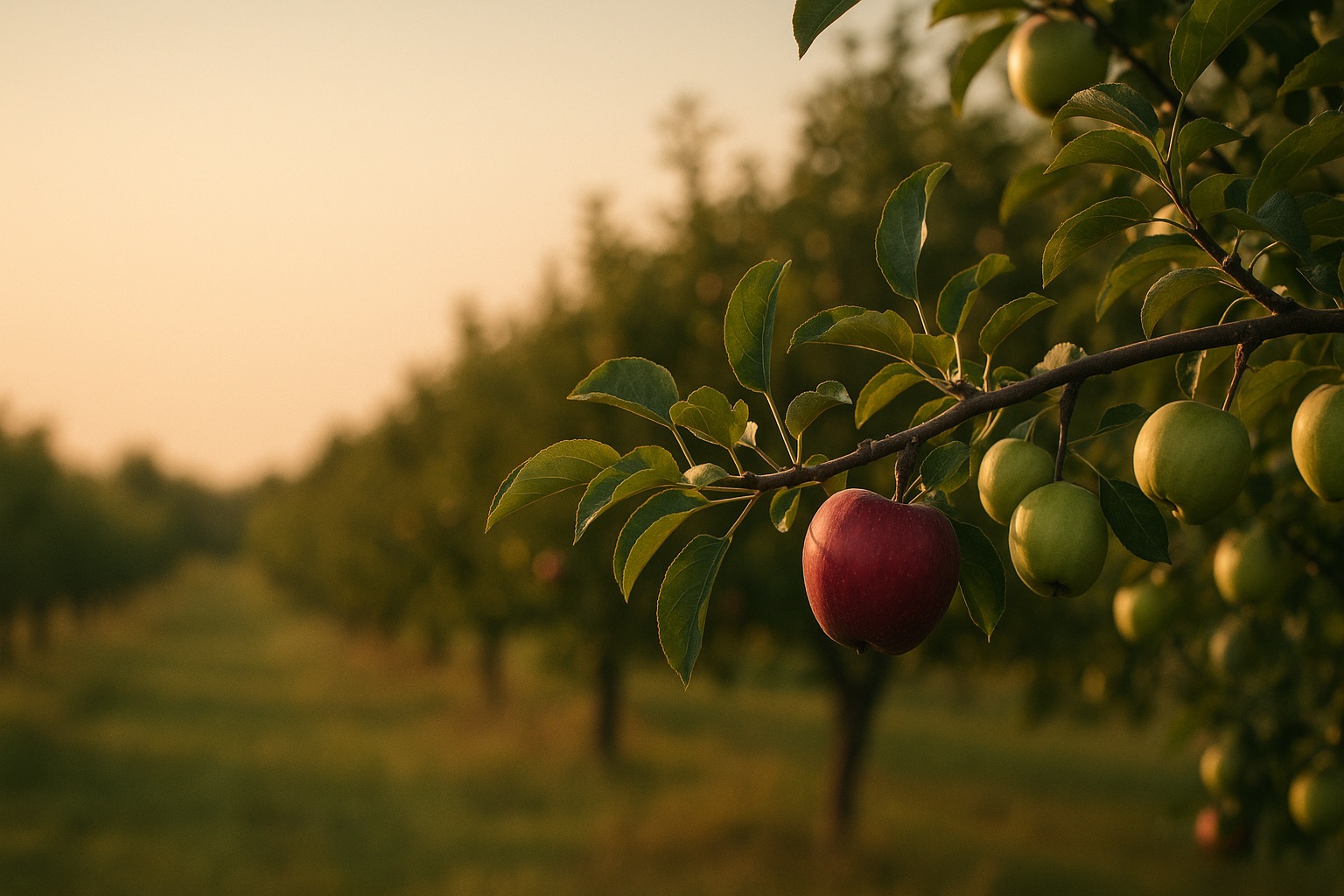
As of September 13, 2026. The quotes come from Gregor Dorsch's German-language masterclass of August 25, 2026, lightly edited from the transcript and translated. The image of seed coming up is a metaphor, not a statistic on conversion rates; nine months is an experience-based estimate. The article image was created with AI.